

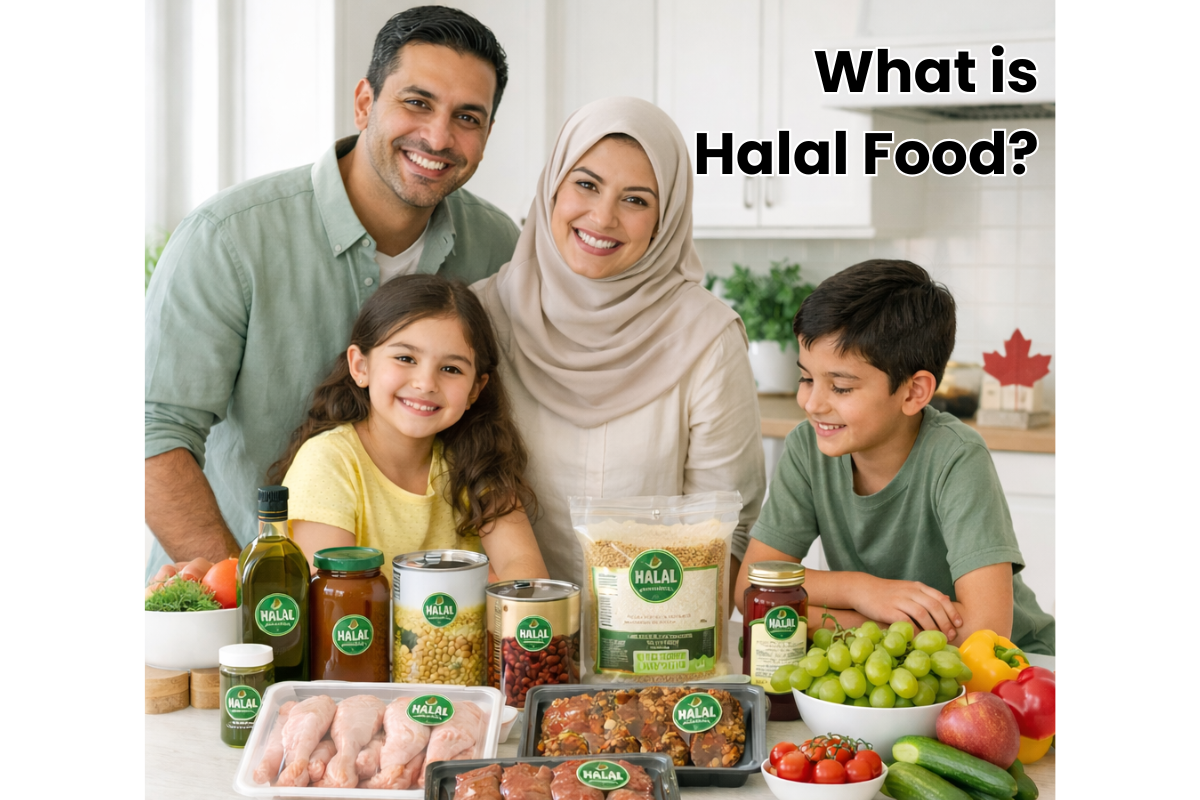
Halal food is more than just what Muslims eat, it is a core part of Islamic faith, ethics, and daily life. In Canada, where food options are diverse and global, many Muslims often ask: What exactly makes food halal, and how can we be sure what we are consuming is truly permissible?
This guide explains the meaning of halal food, how it is defined in Islam, how halal certification works in Canada, and why understanding halal matters for both Muslims and non-Muslims.
What Is Halal Food?
Halal food refers to food that is permissible under Islamic law (Shariah).
For food to be halal, it must meet specific requirements related to ingredients, sourcing, preparation, and handling. Any food that does not meet these requirements is considered haram (forbidden).
In simple terms, halal food must be:
Made from permissible ingredients
Prepared according to Islamic guidelines
Free from contamination with haram substances
What Does Halal Mean in Islam?
The word halal comes from Arabic and means lawful or permitted. In Islam, halal is not limited to food, it applies to lifestyle, finance, behavior, and daily actions. However, halal food has special importance because it directly affects a Muslim’s worship and spiritual well-being.
The opposite of halal is haram, which refers to what is prohibited in Islam.
What Makes Food Halal or Haram?
Food is considered halal or haram based on three main factors:
1. Ingredients
Certain ingredients are strictly forbidden, including:
Pork and pork by-products
Alcohol and intoxicants
Blood
Meat from animals not slaughtered according to Islamic rules
Even small amounts of haram ingredients can make a product impermissible.
2. Method of Preparation
For meat to be halal:
The animal must be slaughtered according to Islamic guidelines
The name of Allah must be mentioned
Blood must be fully drained
Improper slaughter automatically makes the meat haram, regardless of the animal type.
3. Cross-Contamination
Halal food must not come into contact with haram substances during:
Processing
Packaging
Storage
Transportation
This is especially important in shared factories or kitchens.
Is Halal Only About Meat?
No. Halal is not limited to meat.
Halal guidelines also apply to:
Processed foods
Snacks and beverages
Cooking oils
Flavourings and additives
Vitamins, capsules, and supplements
Some products appear vegetarian but may still contain alcohol-based flavourings or animal-derived additives, making them non-halal.
What Is Halal Certification?
Halal certification is a formal verification that a product meets halal standards. Certification bodies inspect:
Ingredients and suppliers
Manufacturing processes
Cleaning and sanitation practices
Storage and logistics
Certified products usually carry a halal logo from a recognized authority.
Why Halal Certification Matters in Canada
In Canada, food regulations do not automatically ensure halal compliance. This makes certification especially important for Muslim consumers.
Halal certification:
Builds trust and transparency
Protects consumers from misleading labels
Ensures consistency in halal standards
Helps Muslims make confident choices
Since Canada imports food from many countries, certification acts as an additional layer of assurance.
Common Questions About Halal Food (FAQ)
Can non-Muslims eat halal food?
Yes. Halal food is safe, hygienic, and suitable for everyone. Many non-Muslims choose halal for ethical or quality reasons.
Is halal food healthier?
Halal food emphasizes cleanliness, ethical sourcing, and proper handling. While halal is primarily a religious requirement, these practices may offer health benefits.
Is vegetarian food always halal?
Not necessarily. Some vegetarian products contain alcohol, animal enzymes, or additives that may not be halal.
Is seafood halal?
Most seafood is considered halal, but interpretations may vary based on Islamic schools of thought.
Why Understanding Halal Food Matters
For Muslims, eating halal is an act of faith and obedience. It ensures:
Spiritual peace
Ethical consumption
Trust in what is consumed
For non-Muslims, understanding halal helps promote inclusivity, respect, and informed food choices in a multicultural society like Canada.
Final Thoughts
Halal food is not just about avoiding certain ingredients—it is about intention, ethics, cleanliness, and trust. As awareness grows in Canada, understanding what halal truly means empowers consumers to make informed and confident decisions.
Educational awareness is the first step toward building a transparent and trustworthy halal ecosystem.
5 min read